


How California Energy Efficiency Requirements Affect Pool Heating
Are you considering a new pool or spa for your family home? There are several important decisions to make: the size, depth, shape, material type, location in the yard, cover, filtration equipment, heating system, and safety. Many of these decisions will be based on your budget and others on California permit and code requirements. Let’s discuss one of the newest updates to California code that has a direct impact on new heated spa and pool systems. These are codes related to energy efficiency with pool heating.
2025 California Energy Code: Title 24, Part 6
The purpose of California Energy Code’s Title 24, Part 6 is to:
- Reduce use of electricity and gas energy in homes and businesses.
- Lower utility costs for owners or tenants
- Decrease greenhouse gas emissions to fight climate change
- Help manage the energy demand on California’s power grid
What does this mean for pool and spa owners? For many new heated pool and spa projects, the primary heating system will now need to be powered by solar energy, a heat pump, or another approved energy-efficient option. Gas heaters have historically been a common choice for pool and spa heating, but under the updated code, they generally cannot be used as the sole or primary heating source. Gas heaters are limited to supplemental or backup use as part of a compliant system design.
Per Part 6 of the code, new pool heating projects permitted after January 1, 2026 need to use at least one of the following heating methods:
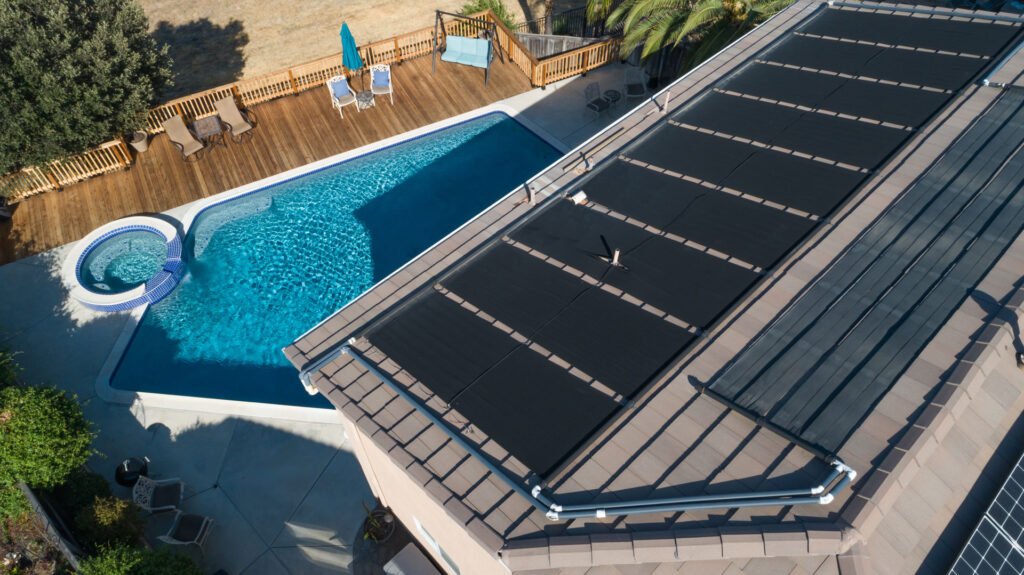
- Solar pool heating sized at 60% or more of the pool/spa surface area for single-family homes, or 65% or more for multifamily/nonresidential projects.
- As an example: A single-family pool that is 15 ft × 30 ft has 450 sq ft. of surface area. Under the 60% sizing requirement, 450 x 60% = 270 sq ft of solar pool heating collector area would be required.
- A heat pump pool heater as the primary heater, sized under the following requirement: the heat pump must be able to achieve a 10°F temperature rise in no more than 17.5 hours.
- A system that gets at least 60% of annual heating energy from on-site renewable or recovered energy. This could describe a wide-variety of power sources, from anaerobic digesters to gas recovery systems. Most of these would be an extravagant way of heating a swimming pool or spa.
- A solar and heat pump combination where the heat pump is essentially the supplementary heater for the solar pool heater.
- Any approved system that uses no more energy than the listed options. (This is another catch-all category that includes future systems that would meet the energy requirements of Part 6.)
It’s important to understand that requirements can vary by project and local jurisdiction, so it is recommended that homeowners confirm details with their reputable pool contractor, solar installer, and local building department. Solaron is already experienced with Title 24, Part 6 and can help you navigate all of this language. Nevertheless, you may be wondering whether a heated pool really that much of a benefit in the face of new energy efficiency requirements. In other words, is pool heating worth the potential for hassle?
The Benefits of a Heated Pool
For many homeowners, heating a pool makes the exercise, decorative, and entertainment investment more enjoyable by extending the swim season and making the water more comfortable. When neighbors are pulling out the winter pool cover and shutting the pool down, pool heater owners can swim for months longer. They also begin their swim season earlier in the year instead of waiting for summer temperatures to arrive.
The Best Heating Option
Heat pumps have a comparable cost for installation to solar pool heating, but heat pumps use electricity every time they run. That represents an ongoing cost that grows year after year. Solar pool heating offers the lowest operating cost and provides the strongest long-term savings for California pool owners with good sun exposure. Both options, or a combination of the two, can be efficient and reliable. The best choice depends on your budget, roof space, desired water temperature, and long-term energy goals. The fact remains, however, that if you can use solar pool heating, you will save money on pool heating over the near and long-term.
What Will You Choose?
If you are a homeowner planning a new spa or pool build, and heating it is important to you, you need an experienced team to help you consider your options. At Solaron, we understand that codes and regulations can at times be confusing. Our professional team keeps up to date with California energy requirements and can review your project to help you understand how solar pool heating meets the new Title 24 standards. Contact us today for a free solar pool heating analysis!